Semaglutide
What Semaglutide is
Semaglutide is a synthetic analogue of human glucagon-like peptide-1, GLP-1(7-37). It carries two amino-acid substitutions (Aib at position 8 and Arg at position 34) and a C18 fatty diacid attached to lysine 26 through a short linker. The substitutions protect it from DPP-4 breakdown, and the fatty acid binds serum albumin, which is what gives the molecule its long half-life compared with native GLP-1.
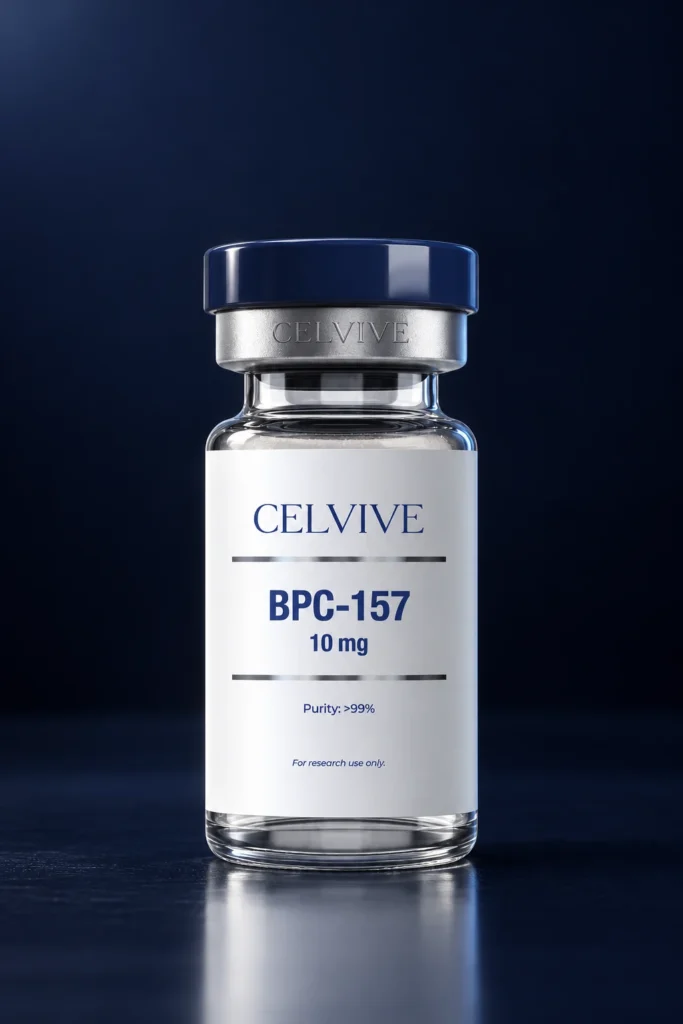
Medicines containing semaglutide are approved for type 2 diabetes and weight management. This product is not one of them: Celvive supplies semaglutide as a 10 mg lyophilised (freeze-dried) powder in a sealed vial, for laboratory research only.
Where Semaglutide has been studied
Semaglutide is one of the most extensively documented peptides in metabolic research, with both preclinical and large clinical datasets. The main themes are:
- GLP-1 receptor pharmacology: receptor affinity, albumin binding and the structure-activity work that led to once-weekly analogues.
- Glycaemic models: glucose-dependent insulin secretion and glucagon suppression.
- Appetite and body-weight research: central effects on food intake and gastric emptying.
- Comparator studies: semaglutide is the usual reference compound when newer dual and triple agonists are evaluated.
Key published findings
Lau and colleagues described the design of semaglutide at Novo Nordisk, reporting that the fatty-acid side chain and linker chemistry were the key features for high albumin affinity while keeping GLP-1 receptor potency. In the STEP 1 trial, Wilding and colleagues reported the effect of once-weekly semaglutide on body weight over 68 weeks in adults without diabetes.
Semaglutide is also the active comparator in head-to-head work with newer compounds, for example the SURPASS-2 trial of tirzepatide.
Limits of the evidence on Semaglutide
Clinical results concern licensed pharmaceutical products given under medical supervision. They do not describe this research reagent, which is not a medicinal product and is not approved by the EMA or the FDA for any use.
Working with Semaglutide in the lab
Lyophilised peptides are normally reconstituted with a sterile diluent before use in an experiment. Bacteriostatic water and 0.6% acetic acid are available in our lab essentials. Storage and stability guidance is in the FAQ, and a batch certificate can be requested on the certificates of analysis page.
Semaglutide is often compared with multi-receptor agonists. See tirzepatide (GIP and GLP-1), retatrutide (GIP, GLP-1 and glucagon), the amylin analogue cagrilintide, or browse every compound in Metabolic and GLP research.
Semaglutide research FAQ
What form is the peptide supplied in?
The vial contains 10 mg of lyophilised powder under a sealed cap. Freeze-drying keeps peptides stable in transit; move the vial to cold storage when it arrives.
How does semaglutide differ from tirzepatide?
Semaglutide acts on the GLP-1 receptor only. Tirzepatide is a single peptide that activates both the GIP and GLP-1 receptors, and the two have been compared directly in clinical research.
Is this the same as an approved medicine?
No. It is a research-grade reagent sold for laboratory use only, not a finished pharmaceutical product.
Can I get documentation for my batch?
Yes. Request a certificate of analysis for your order and our team will send the batch documentation where it is available.
Selected literature
- Discovery of the Once-Weekly Glucagon-Like Peptide-1 (GLP-1) Analogue SemaglutideLau J et al. · J Med Chem, 2015 · PMID 26308095
- Once-Weekly Semaglutide in Adults with Overweight or ObesityWilding JPH et al. · N Engl J Med, 2021 · PMID 33567185
- Tirzepatide versus Semaglutide Once Weekly in Patients with Type 2 DiabetesFrías JP et al. · N Engl J Med, 2021 · PMID 34170647
PubMed records selected for relevance to the compound. They describe published research, not outcomes or uses.