BPC-157
What BPC-157 is
BPC-157 is a synthetic pentadecapeptide: a chain of 15 amino acids (Gly-Glu-Pro-Pro-Pro-Gly-Lys-Pro-Ala-Asp-Asp-Ala-Gly-Leu-Val) with a molecular weight of about 1,419 Da. Its sequence is a fragment of a larger protein isolated from human gastric juice, called Body Protection Compound, which is where the name comes from.
Unlike many short peptides, it is unusually stable in gastric juice. That is one reason it has been examined by both oral and injected routes in animal models. Most of the published work is preclinical, and a large share comes from a single research group in Zagreb, Croatia.
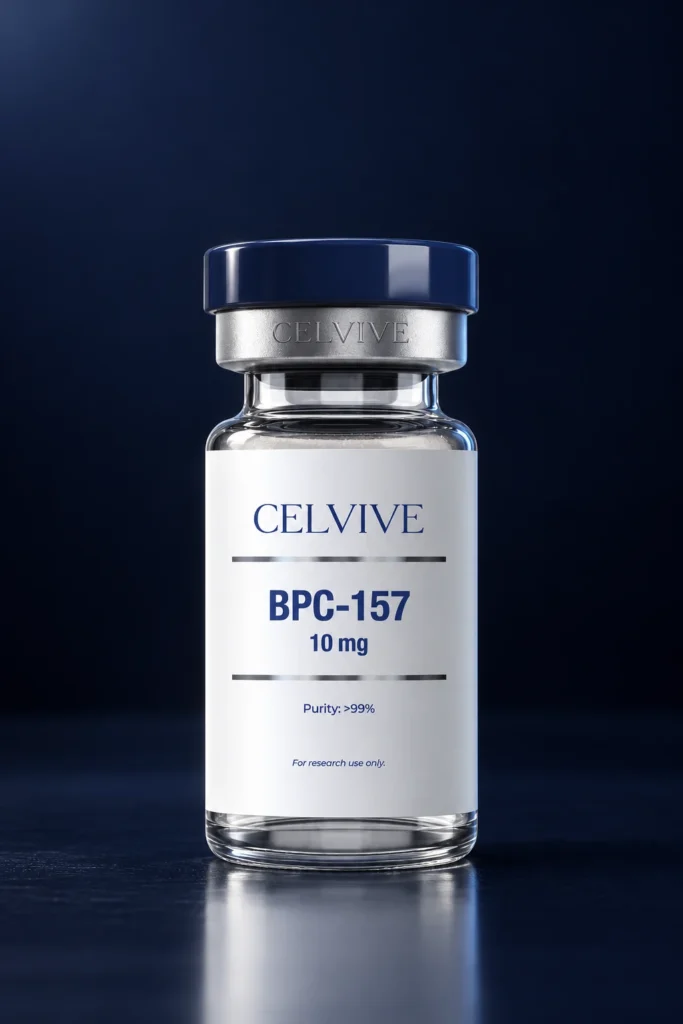
Celvive supplies this peptide as a 10 mg lyophilised (freeze-dried) powder in a sealed vial and as a 10 mg QuickPen, for laboratory research only.
Where BPC-157 has been studied
Research on the compound covers several tissue types. The main themes in the literature are:
- Tendon and ligament models: rodent studies of transected tendons and ligaments, and cell studies on tendon fibroblasts.
- Muscle and bone models: muscle crush injury, tendon-to-bone healing and fracture models.
- Gastrointestinal tissue: mucosal lesions, fistulas and inflammation, in line with the peptide’s gastric origin.
- Blood vessels: angiogenesis and interactions with the nitric-oxide (NO) system.
Proposed mechanisms
Cell studies suggest the peptide affects how fibroblasts survive and migrate. In cultured tendon fibroblasts, Chang and colleagues reported increased outgrowth, survival under stress and migration, linked to activation of the FAK and paxillin pathway.
Other papers describe effects on VEGF receptor 2 signalling and on the NO system, which are thought to relate to the angiogenesis findings. These mechanisms are still being worked out, and many of them have been reported by a small number of laboratories.
Limits of the evidence on BPC-157
Almost all of the data come from animal and cell models. Controlled human trials are lacking, and the compound is not approved as a medicine by the EMA or the FDA. Findings from preclinical models are not evidence of outcomes in people.
Working with the peptide in the lab
Lyophilised peptides are normally reconstituted with a sterile diluent before use in an experiment. Bacteriostatic water is available in our lab essentials. Storage and stability guidance is in the FAQ, and a batch certificate can be requested on the certificates of analysis page.
BPC-157 is often studied alongside thymosin beta-4 fragments. See TB-500, the combined BPC-157 and TB-500 blend, or browse every compound in Recovery and tissue research.
BPC-157 research FAQ
What form is the peptide supplied in?
The vial contains 10 mg of lyophilised powder under a sealed cap. Freeze-drying keeps short peptides stable in transit; move the vial to cold storage when it arrives. The QuickPen is a pre-filled 10 mg format; its fill volume and concentration are not yet published.
Is BPC-157 the same as TB-500?
No. They are separate compounds with different sequences. TB-500 is a synthetic fragment related to thymosin beta-4, while this pentadecapeptide comes from a gastric protein. They are often studied in the same tissue-repair models, which is why a combined blend exists.
Can I get documentation for my batch?
Yes. Request a certificate of analysis for the presentation you order, and our team will send the batch documentation where it is available.
Selected literature
- Gastric pentadecapeptide body protection compound BPC 157 and its role in accelerating musculoskeletal soft tissue healingGwyer D et al. · Cell Tissue Res, 2019 · PMID 30915550
- The promoting effect of pentadecapeptide BPC 157 on tendon healing involves tendon outgrowth, cell survival, and cell migrationChang CH et al. · J Appl Physiol, 2011 · PMID 21030672
- Stable Gastric Pentadecapeptide BPC 157 and Wound HealingSeiwerth S et al. · Front Pharmacol, 2021 · PMID 34267654
- Multifunctionality and Possible Medical Application of the BPC 157 Peptide-Literature and Patent ReviewJózwiak M et al. · Pharmaceuticals (Basel), 2025 · PMID 40005999
PubMed records selected for relevance to the compound. They describe published research, not outcomes or uses.