- Home
- Catalog
- Immune & signalling
- PNC-27
peptide
PNC-27
A membrane-active peptide derived from the p53 and MDM2 binding domain.
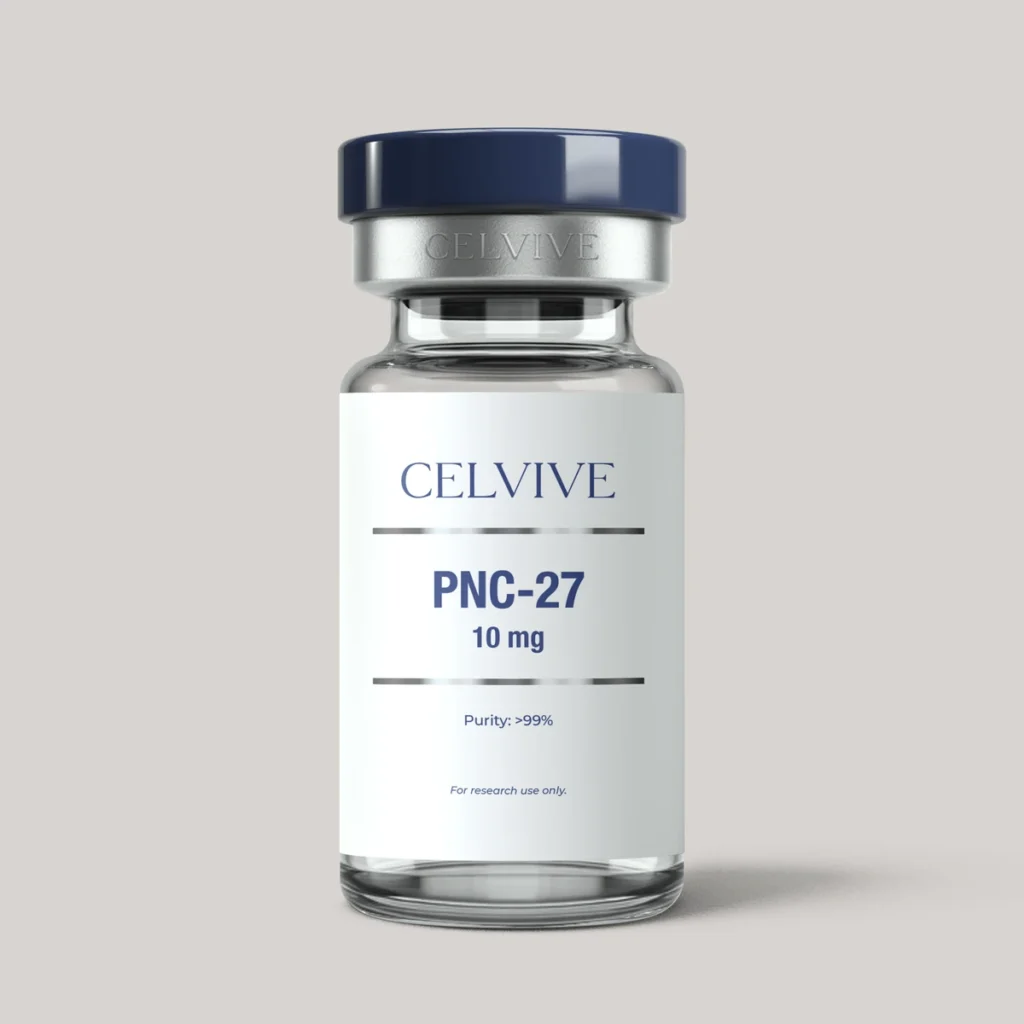
PNC-27 · 10 mg · Lyophilised vial
peptide
PNC-27
A membrane-active peptide derived from the p53 and MDM2 binding domain.
€ 150.00per vial, EUR
In stock
Presentation1 option
What it is
PNC-27 is a synthetic peptide that combines a segment of the p53 protein with a membrane-residency sequence. It is studied in cancer cell lines for its interaction with membrane-bound HDM-2.
Where it has been studied
- Cancer cell line cytotoxicity assays
- Membrane HDM-2 binding studies
- p53 pathway research
Selected literature
- PNC-27, a Chimeric p53-Penetratin Peptide Binds to HDM-2 in a p53 Peptide-like Structure, Induces Selective Membrane-Pore Formation and Leads to Cancer Cell LysisSarafraz-Yazdi E et al. · Biomedicines, 2022 · PMID 35625682
- Targeting Membrane HDM-2 by PNC-27 Induces Necrosis in Leukemia Cells But Not in Normal Hematopoietic CellsThadi A et al. · Anticancer Res, 2020 · PMID 32878773
- HDM-2-Targeting Peptide PNC-27 Kills Cervical Cancer Cells but not Normal Cervical CellsKrzesaj PK et al. · Ann Clin Lab Sci, 2025 · PMID 40750238
PubMed records selected for relevance to the compound. They describe published research, not outcomes or uses.
Specifications
| Compound | PNC-27 |
|---|---|
| Type | Peptide |
| Selected presentation | 10 mg · Lyophilised vial |
| Form | Lyophilised powder in a sealed glass vial |
| Fill volume and concentration | Not applicable (lyophilised) |
| Label | CELVIVE wordmark, compound name, amount, "Purity: >99%", "For research use only" |
| Storage | -20 °C for long-term storage; 2 to 8 °C for under three months; away from light |
| Certificate of analysis | Not yet published online. Request for a batch |
| Research areas | Immune & signalling |
| All presentations | 10 mg lyophilised vial · € 150.00 |
Handling
- Lyophilised peptides tolerate room temperature for several weeks in transit. Move to cold storage on receipt.
- Reconstituted vials are typically used within three to four weeks at 2 to 8 °C; stability varies by compound.
- Opened or unsealed vials cannot be returned. Transit damage must be documented within 24 hours.
Same research area
Related compounds
Thymosin alpha-1
Thymalfasin, 28-residue thymic peptide
5 mg vial · 10 mg vial
from € 40.00
View options