- Home
- Catalog
- Hormonal & reproductive
- Kisspeptin-10
peptide · also known as Metastin
Kisspeptin-10
A ten-amino-acid fragment of kisspeptin, the upstream regulator of GnRH.
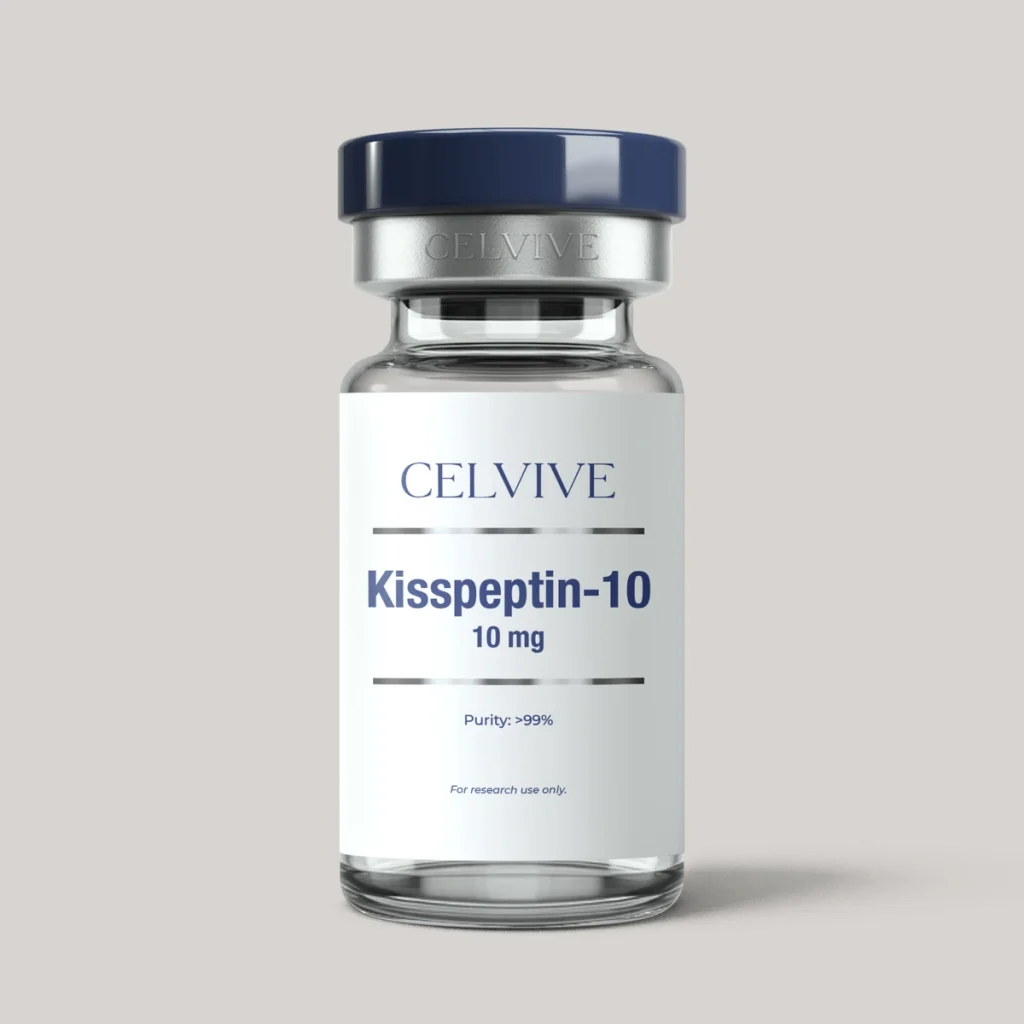
Kisspeptin-10 · 10 mg · Lyophilised vial
peptide · also known as Metastin
Kisspeptin-10
A ten-amino-acid fragment of kisspeptin, the upstream regulator of GnRH.
€ 40.00per vial, EUR
In stock
Presentation1 option
What it is
Kisspeptin-10 is the shortest active fragment of the kisspeptin peptides encoded by the KISS1 gene. Acting on the KISS1R receptor, it is a key regulator of GnRH neurons and a reference compound in reproductive neuroendocrinology.
Where it has been studied
- GnRH neuron activation
- Puberty and fertility models
- Metastasis-suppressor (metastin) biology
Selected literature
- Understanding the functions of kisspeptin and kisspeptin receptor (Kiss1R) from clinical case studiesKe R et al. · Peptides, 2019 · PMID 30339828
- Kisspeptin-10 binding to Gpr54 in osteoclasts prevents bone loss by activating Dusp18-mediated dephosphorylation of SrcLi Z et al. · Nat Commun, 2024 · PMID 38346942
- Structural basis for Kisspeptin-10 selectivity toward KISS1R: computational insightsNetesa MA et al. · In Silico Pharmacol, 2026 · PMID 42707558
PubMed records selected for relevance to the compound. They describe published research, not outcomes or uses.
Specifications
| Compound | Kisspeptin-10 (Metastin) |
|---|---|
| Type | Peptide |
| Selected presentation | 10 mg · Lyophilised vial |
| Form | Lyophilised powder in a sealed glass vial |
| Fill volume and concentration | Not applicable (lyophilised) |
| Label | CELVIVE wordmark, compound name, amount, "Purity: >99%", "For research use only" |
| Storage | -20 °C for long-term storage; 2 to 8 °C for under three months; away from light |
| Certificate of analysis | Not yet published online. Request for a batch |
| Research areas | Hormonal & reproductive |
| All presentations | 10 mg lyophilised vial · € 40.00 |
Handling
- Lyophilised peptides tolerate room temperature for several weeks in transit. Move to cold storage on receipt.
- Reconstituted vials are typically used within three to four weeks at 2 to 8 °C; stability varies by compound.
- Opened or unsealed vials cannot be returned. Transit damage must be documented within 24 hours.
Same research area