- Home
- Catalog
- Cognitive & neuro research
- Oxytocin acetate
peptide
Oxytocin acetate
The nine-amino-acid neurohypophysial peptide, as the acetate salt.
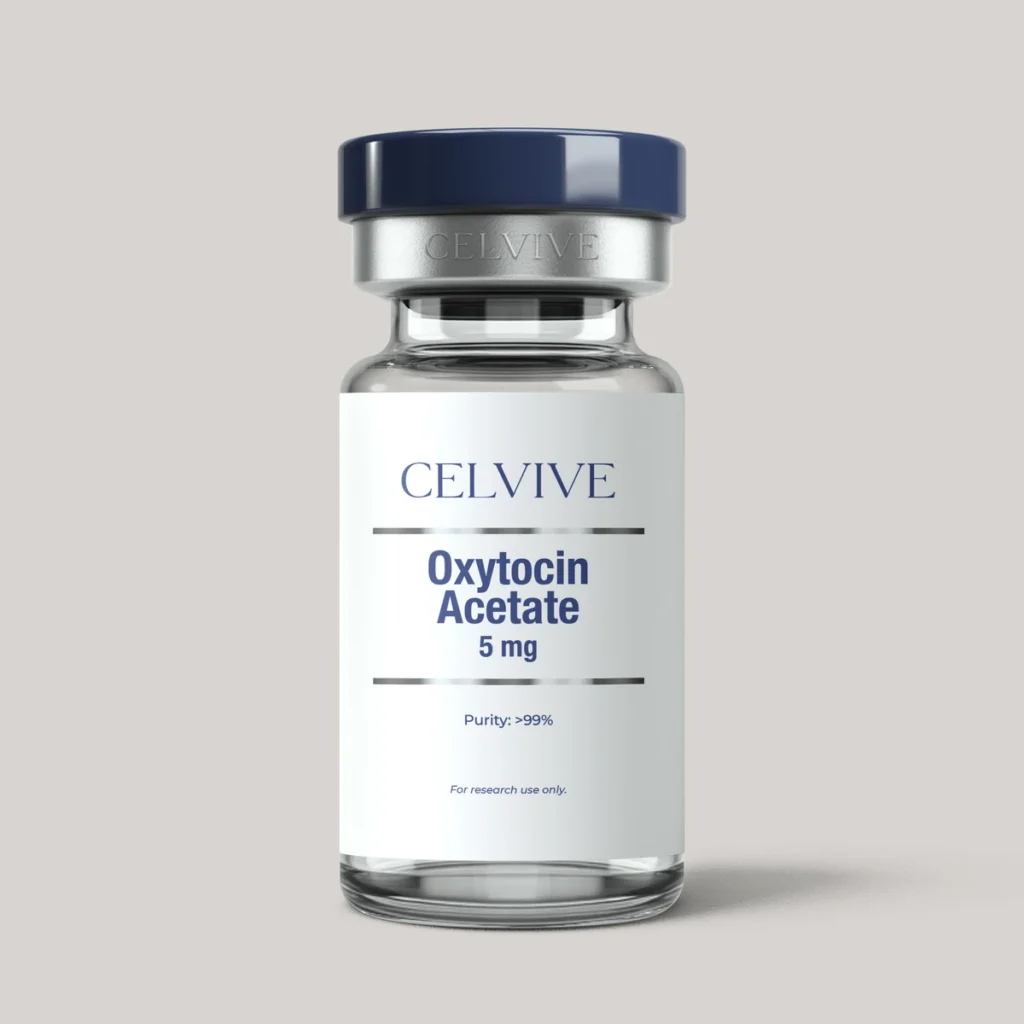
Oxytocin acetate · 5 mg · Lyophilised vial
peptide
Oxytocin acetate
The nine-amino-acid neurohypophysial peptide, as the acetate salt.
€ 35.00per vial, EUR
In stock
Presentation1 option
What it is
Oxytocin is a cyclic nonapeptide produced in the hypothalamus and released from the posterior pituitary. It is one of the most studied neuropeptides in social behaviour and neuroendocrine research.
Where it has been studied
- Social behaviour models in rodents
- Oxytocin receptor pharmacology
- Uterine and mammary smooth-muscle studies
Selected literature
- The Oxytocin Receptor: From Intracellular Signaling to BehaviorJurek B et al. · Physiol Rev, 2018 · PMID 29897293
- Oxytocin, Vasopressin, and Social Behavior: From Neural Circuits to Clinical OpportunitiesRigney N et al. · Endocrinology, 2022 · PMID 35863332
- Oxytocin and the Neurobiology of Prosocial BehaviorMarsh N et al. · Neuroscientist, 2021 · PMID 32981445
PubMed records selected for relevance to the compound. They describe published research, not outcomes or uses.
Specifications
| Compound | Oxytocin acetate |
|---|---|
| Type | Peptide |
| Selected presentation | 5 mg · Lyophilised vial |
| Form | Lyophilised powder in a sealed glass vial |
| Fill volume and concentration | Not applicable (lyophilised) |
| Label | CELVIVE wordmark, compound name, amount, "Purity: >99%", "For research use only" |
| Storage | -20 °C for long-term storage; 2 to 8 °C for under three months; away from light |
| Certificate of analysis | Not yet published online. Request for a batch |
| Research areas | Cognitive & neuro research, Hormonal & reproductive |
| All presentations | 5 mg lyophilised vial · € 35.00 |
Handling
- Lyophilised peptides tolerate room temperature for several weeks in transit. Move to cold storage on receipt.
- Reconstituted vials are typically used within three to four weeks at 2 to 8 °C; stability varies by compound.
- Opened or unsealed vials cannot be returned. Transit damage must be documented within 24 hours.
Same research area