peptide
Semax
A synthetic ACTH(4-7) analogue studied in neuroprotection and cognition.
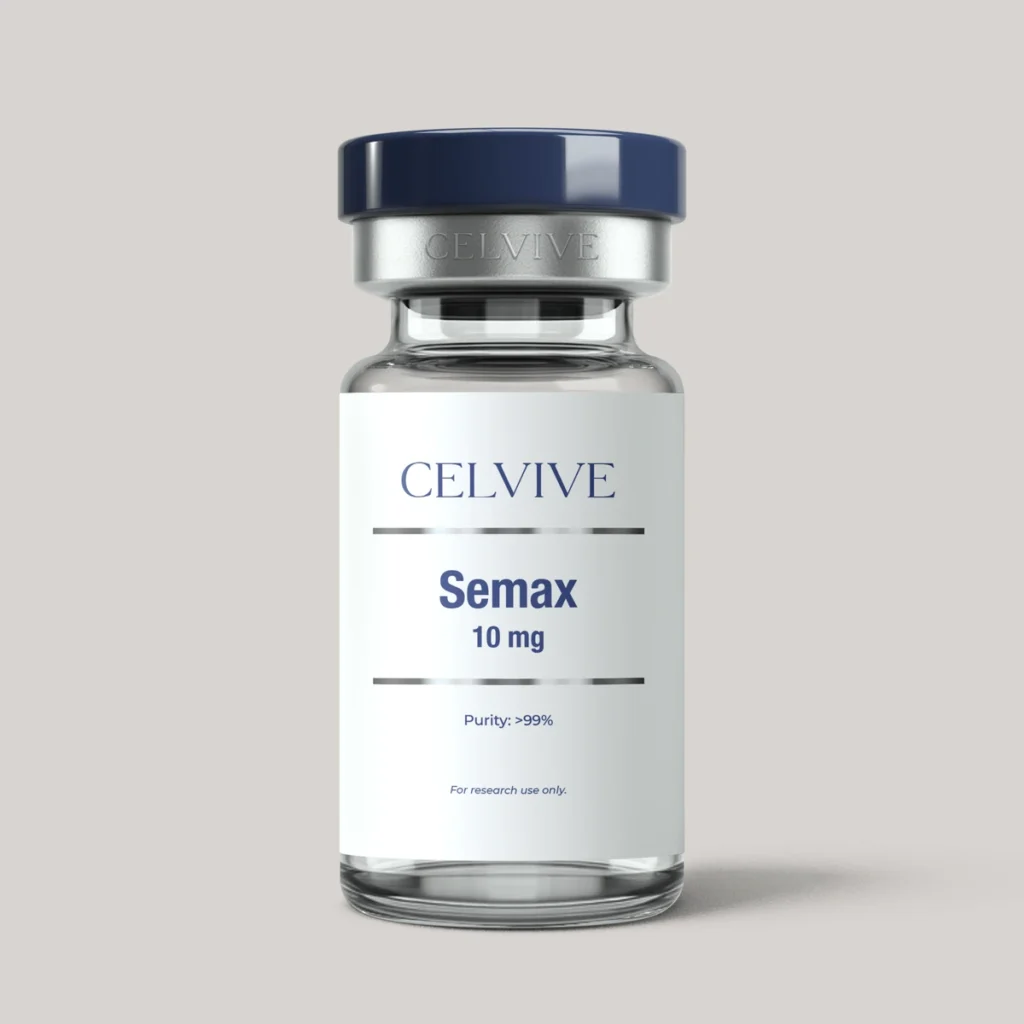
Semax · 10 mg · Lyophilised vial
peptide
Semax
A synthetic ACTH(4-7) analogue studied in neuroprotection and cognition.
€ 30.00per vial, EUR
In stock
Presentation1 option
What it is
Semax is a seven-amino-acid peptide derived from the ACTH(4-10) fragment with a Pro-Gly-Pro extension. It originates from Russian neuropeptide research and is studied in nootropic and neuroprotection models.
Where it has been studied
- BDNF expression and neurotrophin signalling
- Ischaemia models
- Attention and memory tasks in rodents
Selected literature
- Semax, an ACTH(4-10) analogue with nootropic properties, activates dopaminergic and serotoninergic brain systems in rodentsEremin KO et al. · Neurochem Res, 2005 · PMID 16362768
- Semax, synthetic ACTH(4-10) analogue, attenuates behavioural and neurochemical alterations following early-life fluvoxamine exposure in white ratsGlazova NY et al. · Neuropeptides, 2021 · PMID 33418449
- Antidepressant-like and antistress effects of the ACTH(4-10) synthetic analogs Semax and Melanotan II on male rats in a model of chronic unpredictable stressInozemtseva LS et al. · Eur J Pharmacol, 2024 · PMID 39442746
PubMed records selected for relevance to the compound. They describe published research, not outcomes or uses.
Specifications
| Compound | Semax |
|---|---|
| Type | Peptide |
| Selected presentation | 10 mg · Lyophilised vial |
| Form | Lyophilised powder in a sealed glass vial |
| Fill volume and concentration | Not applicable (lyophilised) |
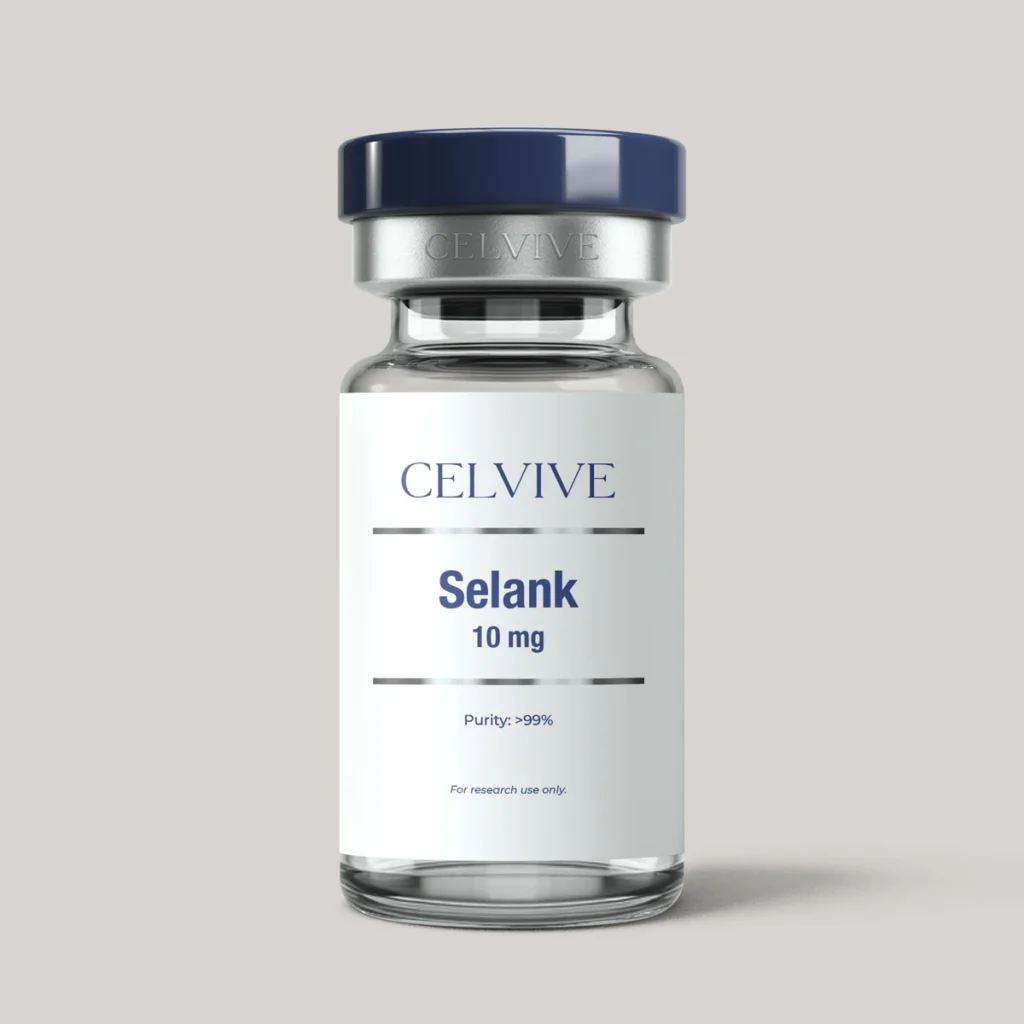
| Label | CELVIVE wordmark, compound name, amount, "Purity: >99%", "For research use only" |
| Storage | -20 °C for long-term storage; 2 to 8 °C for under three months; away from light |
| Certificate of analysis | Not yet published online. Request for a batch |
| Research areas | Cognitive & neuro research |
| All presentations | 10 mg lyophilised vial · € 30.00 |
Handling
- Lyophilised peptides tolerate room temperature for several weeks in transit. Move to cold storage on receipt.
- Reconstituted vials are typically used within three to four weeks at 2 to 8 °C; stability varies by compound.
- Opened or unsealed vials cannot be returned. Transit damage must be documented within 24 hours.
Same research area