- Home
- Catalog
- Metabolic & GLP research
- 5-Amino-1MQ
small molecule · also known as NNMT inhibitor
5-Amino-1MQ
A small-molecule NNMT inhibitor used in adipose and metabolic research.
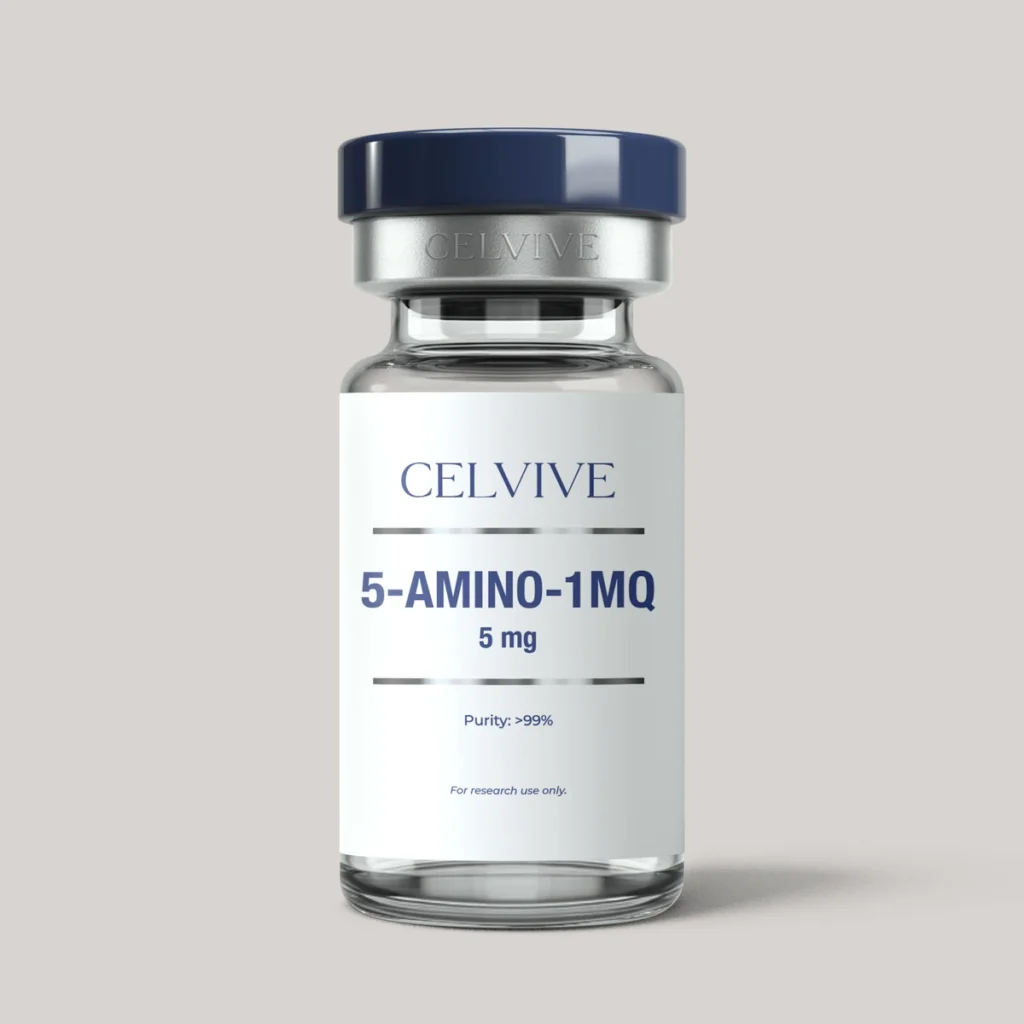
5-Amino-1MQ · 5 mg · Lyophilised vial
small molecule · also known as NNMT inhibitor
5-Amino-1MQ
A small-molecule NNMT inhibitor used in adipose and metabolic research.
€ 35.00per vial, EUR
In stock
Presentation2 options
What it is
5-Amino-1-methylquinolinium (5-Amino-1MQ) is a membrane-permeable small molecule, not a peptide, that inhibits nicotinamide N-methyltransferase (NNMT), an enzyme expressed in adipose tissue and liver. It is supplied as a research reagent.
Where it has been studied
- NNMT inhibition and nicotinamide / NAD+ metabolism in cell and rodent models
- Adipocyte biology and diet-induced obesity models
- Muscle progenitor cell studies
Selected literature
- Reduced calorie diet combined with NNMT inhibition establishes a distinct microbiome in DIO miceDimet-Wiley A et al. · Sci Rep, 2022 · PMID 35013352
- Small molecule inhibitor of nicotinamide N-methyltransferase shows anti-proliferative activity in HeLa cellsAkar S et al. · J Obstet Gynaecol, 2021 · PMID 33645410
PubMed records selected for relevance to the compound. They describe published research, not outcomes or uses.
Specifications
| Compound | 5-Amino-1MQ (NNMT inhibitor) |
|---|---|
| Type | Small molecule |
| Selected presentation | 5 mg · Lyophilised vial |
| Form | Lyophilised powder in a sealed glass vial |
| Fill volume and concentration | Not applicable (lyophilised) |
| Label | CELVIVE wordmark, compound name, amount, "Purity: >99%", "For research use only" |
| Storage | -20 °C for long-term storage; 2 to 8 °C for under three months; away from light |
| Certificate of analysis | Not yet published online. Request for a batch |
| Research areas | Metabolic & GLP research, Longevity & mitochondrial |
| All presentations | 5 mg lyophilised vial · € 35.00 50 mg lyophilised vial · € 70.00 |
Handling
- Lyophilised peptides tolerate room temperature for several weeks in transit. Move to cold storage on receipt.
- Reconstituted vials are typically used within three to four weeks at 2 to 8 °C; stability varies by compound.
- Opened or unsealed vials cannot be returned. Transit damage must be documented within 24 hours.
Same research area