5-Amino-1MQ
Small-molecule NNMT inhibitor for adipose and metabolic research
5 mg vial · 50 mg vial
from € 35.00
View options
peptide · also known as LY3298176, dual agonist
A dual agonist of the GIP and GLP-1 receptors.
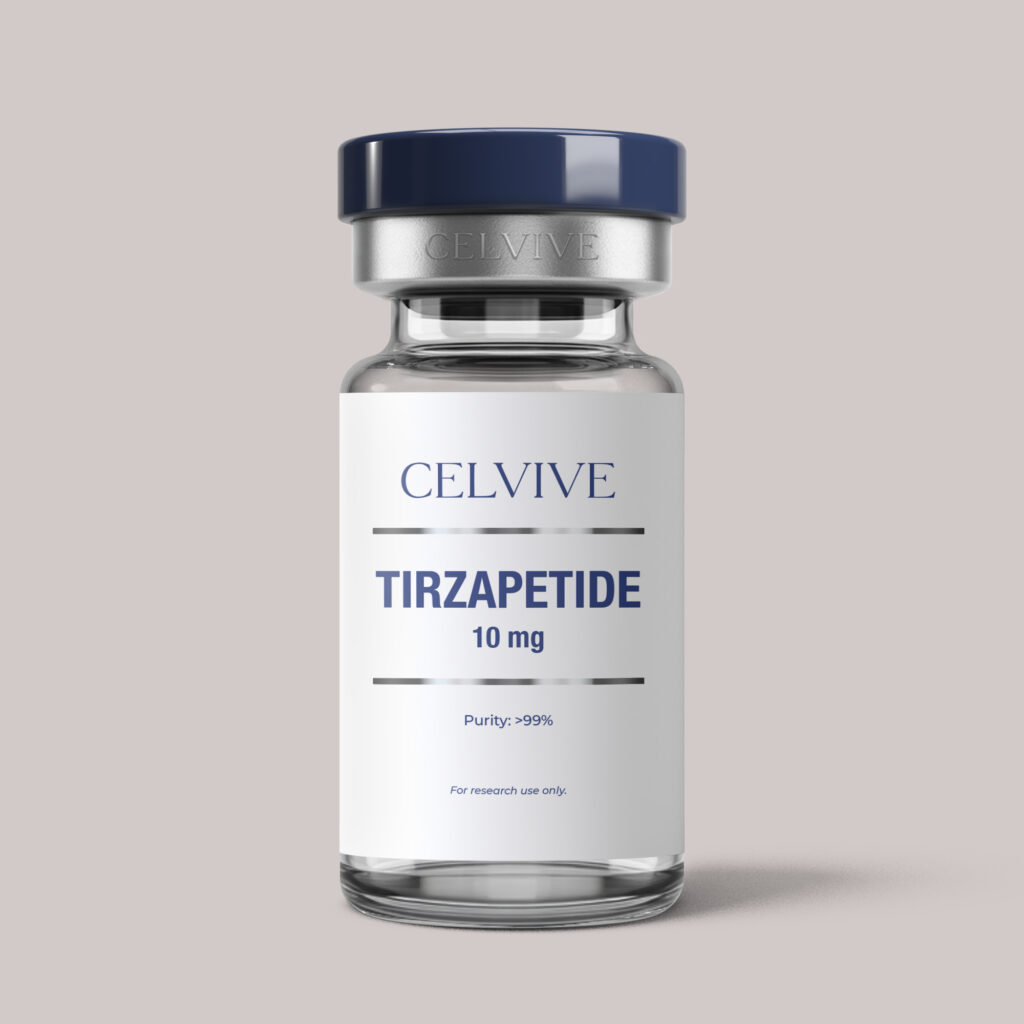
Tirzepatide · 10 mg · Lyophilised vial
peptide · also known as LY3298176, dual agonist
A dual agonist of the GIP and GLP-1 receptors.
In stock
Tirzepatide (LY3298176) is a synthetic 39-amino-acid peptide that activates two incretin receptors: GIP (glucose-dependent insulinotropic polypeptide) and GLP-1 (glucagon-like peptide-1). Its backbone is based on the native GIP sequence. A C20 fatty diacid side chain lets it bind to albumin, which gives it a half-life of about five days and allowed once-weekly administration in clinical trials.
The molecule was developed by Eli Lilly and was the first dual GIP and GLP-1 receptor agonist to reach regulatory approval. Pharmacology studies describe it as an imbalanced agonist: it acts more strongly at the GIP receptor than at the GLP-1 receptor.
Celvive supplies it as a 10 mg lyophilised (freeze-dried) powder in a sealed vial, for laboratory research only.
The compound has one of the largest clinical research programmes of any incretin peptide. The main themes in the literature are:
In SURPASS-2 (Frías et al., 2021), adults with type 2 diabetes were randomised to the dual agonist or to semaglutide 1 mg for 40 weeks. All three doses tested produced larger reductions in HbA1c and body weight than the comparator.
In SURMOUNT-1 (Jastreboff et al., 2022), adults with obesity but without diabetes were followed for 72 weeks. Mean weight reductions were 15.0%, 19.5% and 20.9% across the three doses, against 3.1% with placebo. Gastrointestinal effects were the most commonly reported adverse events.
Several newer peptides extend the same idea. Retatrutide adds glucagon receptor activity to GIP and GLP-1. Survodutide and mazdutide combine GLP-1 with glucagon instead, and cagrilintide is a long-acting amylin analogue. All of them are listed in Metabolic and GLP research.
The vial contains 10 mg of lyophilised powder under a sealed cap. Freeze-drying keeps peptides stable in transit; move the vial to cold storage when it arrives. Lyophilised peptides are normally reconstituted with a sterile diluent such as bacteriostatic water.
For years, GLP-1 receptor agonists were the main incretin-based research tools. Combining GIP and GLP-1 activity in a single molecule let researchers study whether the two pathways add to each other. The trial results for Tirzepatide made dual and triple agonists one of the most active areas of metabolic peptide research, and many newer compounds build on the same design.
No. This product is a research reagent. It is not a medicinal product, is not intended for human or veterinary use, and is sold only for laboratory research.
Yes. Request a certificate on the certificates of analysis page, and see the storage FAQ for handling guidance.
PubMed records selected for relevance to the compound. They describe published research, not outcomes or uses.
| Compound | Tirzepatide (LY3298176, dual agonist) |
|---|---|
| Type | Peptide |
| Selected presentation | 10 mg · Lyophilised vial |
| Form | Lyophilised powder in a sealed glass vial |
| Fill volume and concentration | Not applicable (lyophilised) |
| Label | CELVIVE wordmark, compound name, amount, "Purity: >99%", "For research use only" |
| Storage | -20 °C for long-term storage; 2 to 8 °C for under three months; away from light |
| Certificate of analysis | View COA · Download PDFNot yet published online. Request for a batch |
| Research areas | Metabolic & GLP research |
| All presentations | 10 mg lyophilised vial · € 75.00 |
Same research area
Small-molecule NNMT inhibitor for adipose and metabolic research
5 mg vial · 50 mg vial