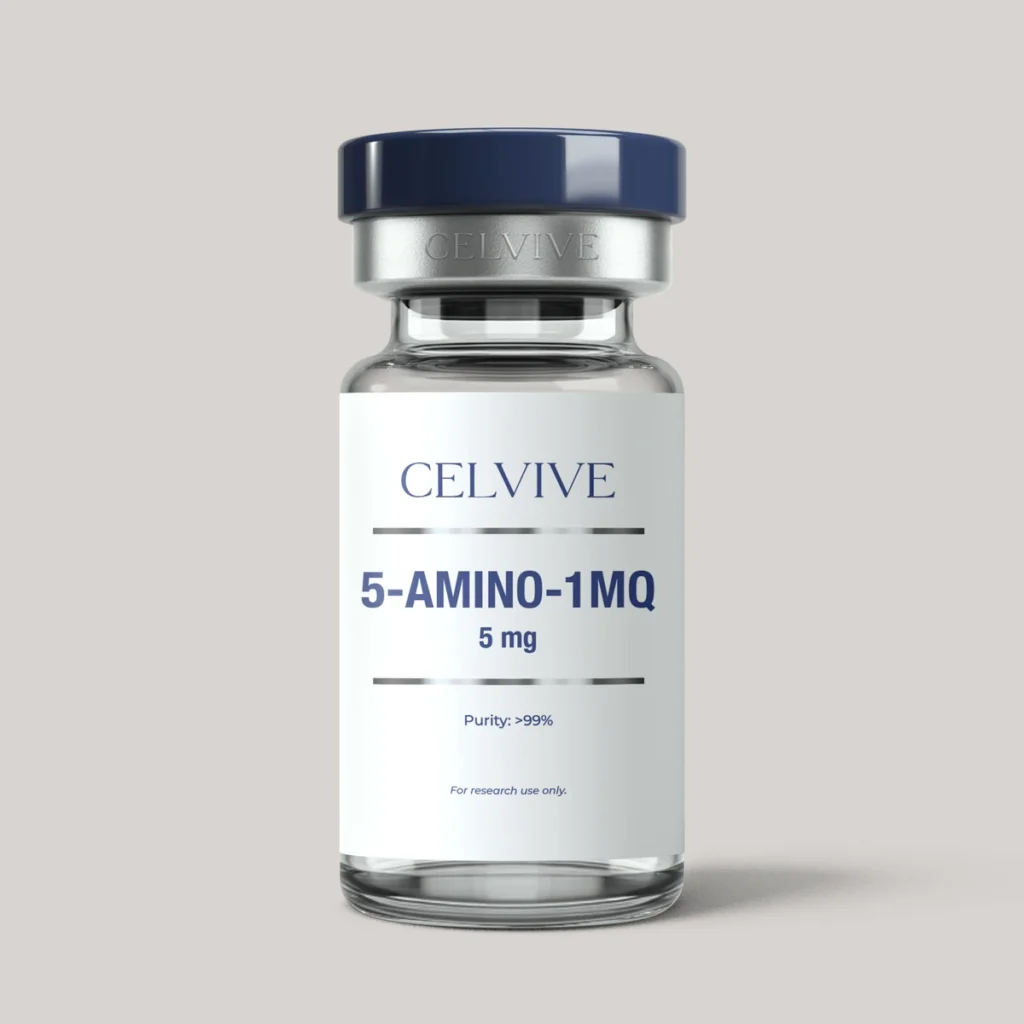
5-Amino-1MQ
Small-molecule NNMT inhibitor for adipose and metabolic research
5 mg vial · 50 mg vial
from € 35.00
View options
peptide
A stabilised GHRH(1-44) analogue with a trans-3-hexenoyl modification.
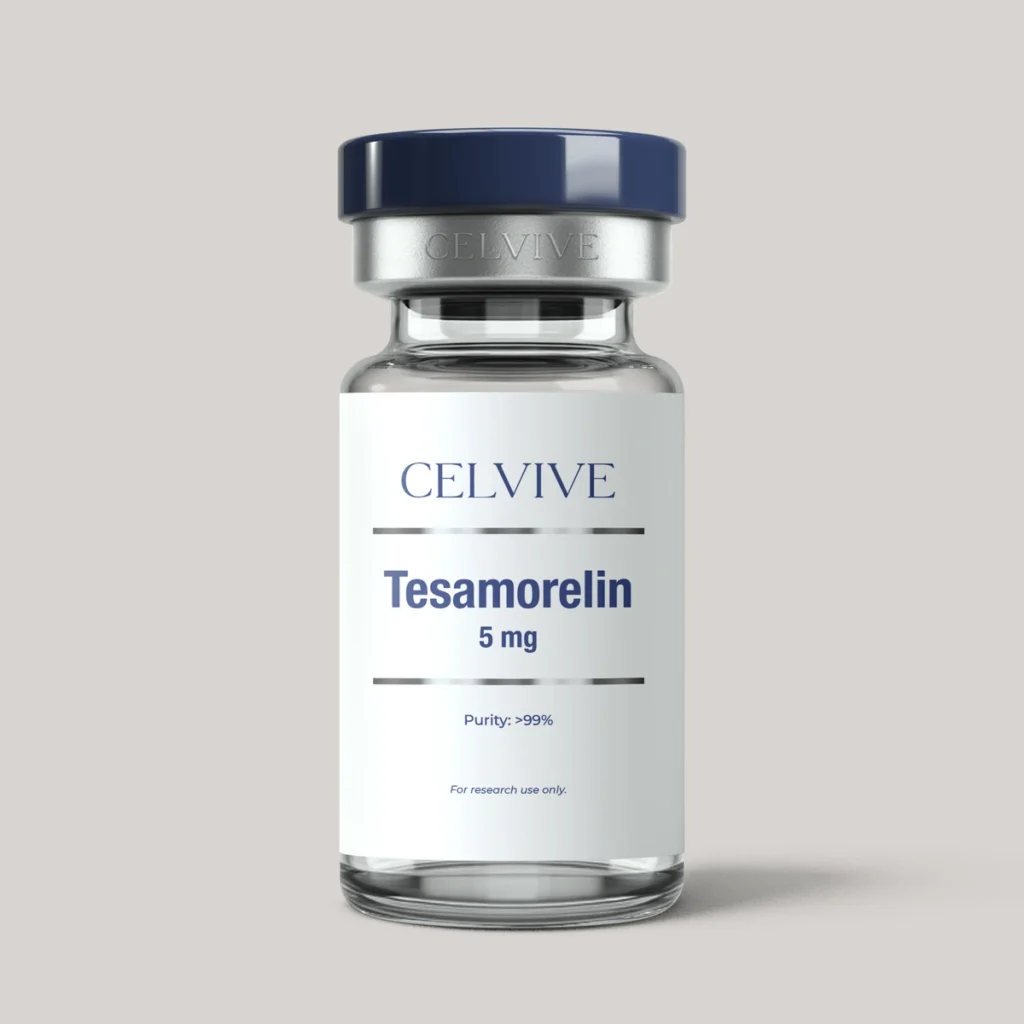
Tesamorelin · 5 mg · Lyophilised vial
peptide
A stabilised GHRH(1-44) analogue with a trans-3-hexenoyl modification.
In stock
Tesamorelin is a synthetic 44-amino-acid analogue of growth-hormone-releasing hormone with an N-terminal trans-3-hexenoic acid group that protects it from enzymatic breakdown. It has been studied in clinical trials and is supplied here as a research reagent.
PubMed records selected for relevance to the compound. They describe published research, not outcomes or uses.
| Compound | Tesamorelin |
|---|---|
| Type | Peptide |
| Selected presentation | 5 mg · Lyophilised vial |
| Form | Lyophilised powder in a sealed glass vial |
| Fill volume and concentration | Not applicable (lyophilised) |
| Label | CELVIVE wordmark, compound name, amount, "Purity: >99%", "For research use only" |
| Storage | -20 °C for long-term storage; 2 to 8 °C for under three months; away from light |
| Certificate of analysis | Not yet published online. Request for a batch |
| Research areas | Metabolic & GLP research, Growth hormone axis |
| All presentations | 5 mg lyophilised vial · € 90.00 10 mg lyophilised vial · € 45.00 |
Same research area
Small-molecule NNMT inhibitor for adipose and metabolic research
5 mg vial · 50 mg vial