peptide · also known as Thymosin beta-4 fragment
TB-500
A synthetic fragment of thymosin beta-4, an actin-binding protein.
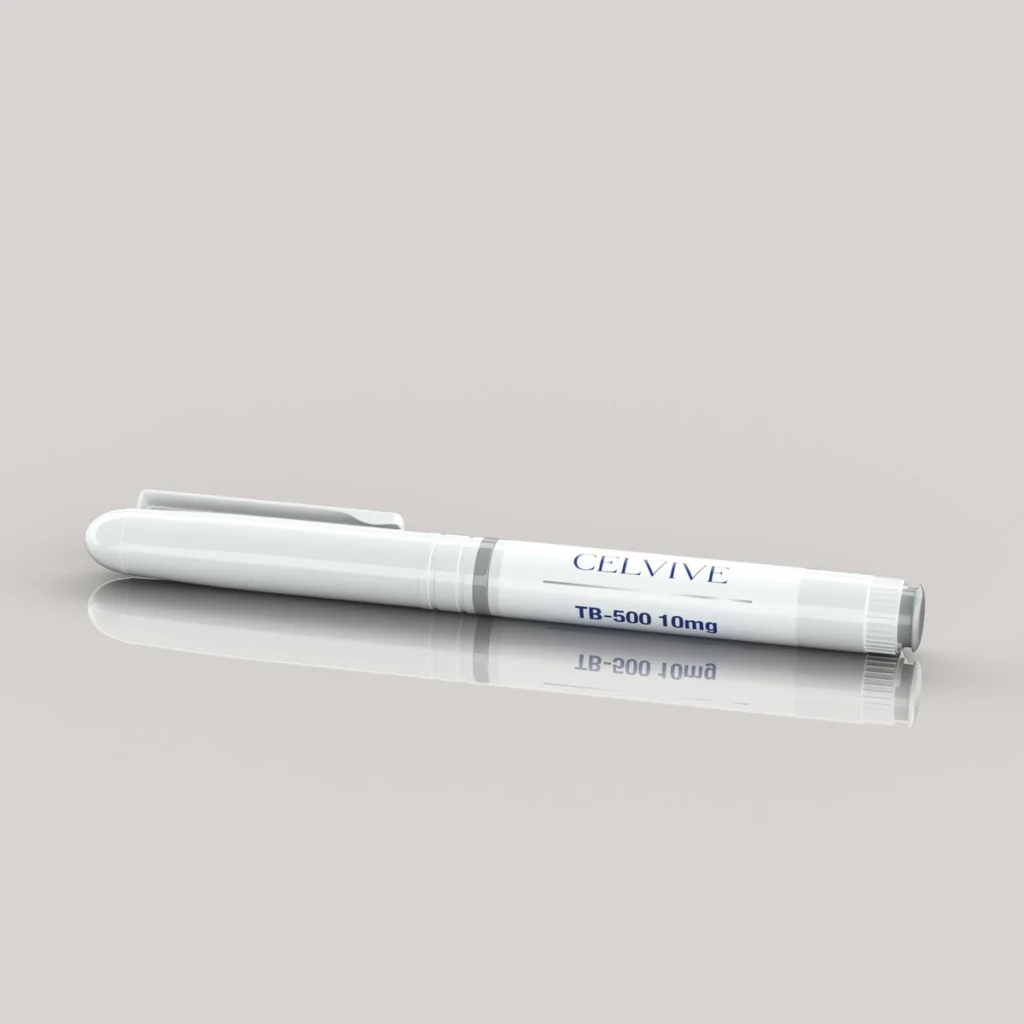
TB-500 · 10 mg · QuickPen
peptide · also known as Thymosin beta-4 fragment
TB-500
A synthetic fragment of thymosin beta-4, an actin-binding protein.
In stock
What TB-500 is
TB-500 is a synthetic peptide based on the actin-binding region of thymosin beta-4 (Tβ4), a 43-amino-acid protein found in almost every cell type. Analytical work has identified the acetylated 17-23 fragment of Tβ4 (LKKTETQ) as a key component of material sold as TB-500.
Celvive supplies TB-500 as a 10 mg lyophilised powder in a sealed vial, for laboratory research only.
Where TB-500 has been studied
Most of the literature concerns the parent protein, thymosin beta-4, with a smaller body of work on the fragment itself. The main areas are:
- Cell migration: actin sequestration and motility assays.
- Wound and corneal repair: dermal and eye injury models.
- Angiogenesis: endothelial cell and blood-vessel formation studies.
- Tendon models: rodent Achilles tendon studies, including work alongside BPC-157.
Proposed mechanisms
Thymosin beta-4 binds G-actin and regulates how cells build and reorganise their cytoskeleton, which is linked to cell migration. Goldstein and colleagues reviewed how this actin-sequestering protein also appears in tissue-repair, angiogenesis and inflammation research.
Limits of the evidence on TB-500
Much of the published work uses full-length thymosin beta-4 rather than the short fragment, and nearly all of it is preclinical. TB-500 is not approved as a medicine by the EMA or the FDA, and it appears on anti-doping prohibited lists.
Working with TB-500 in the lab
Lyophilised peptides are normally reconstituted with a sterile diluent before use in an experiment. Bacteriostatic water and 0.6% acetic acid are available in our lab essentials. Storage and stability guidance is in the FAQ, and a batch certificate can be requested on the certificates of analysis page.
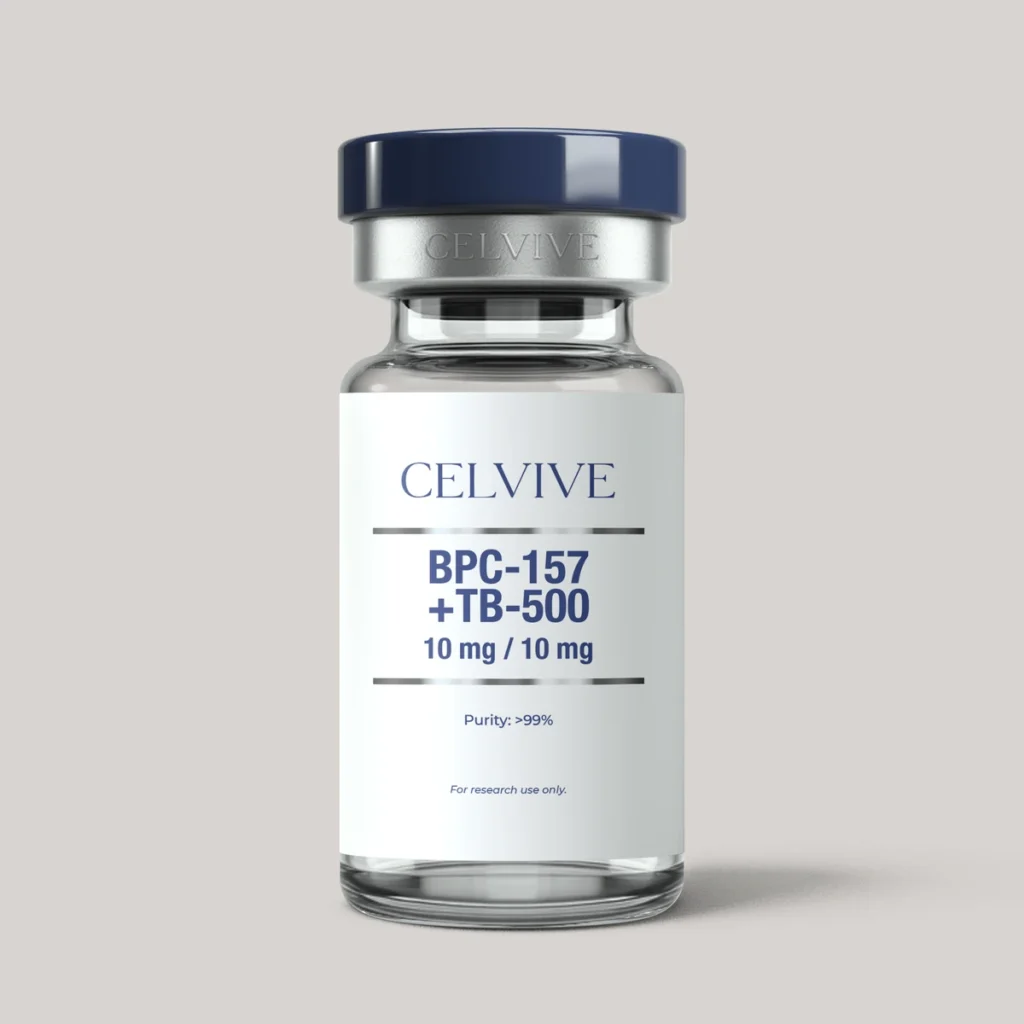
TB-500 is often studied alongside BPC-157; both are combined in the BPC-157 + TB-500 blend. A pre-filled TB-500 QuickPen is also available. Browse every compound in Recovery and tissue research.
TB-500 research FAQ
Is TB-500 the same as thymosin beta-4?
No. Thymosin beta-4 is the full 43-amino-acid protein. TB-500 is a synthetic peptide based on its actin-binding region.
How does TB-500 differ from BPC-157?
They are unrelated sequences. BPC-157 comes from a gastric protein, while TB-500 is derived from thymosin beta-4. They are often used in the same tissue-repair models.
What form is it supplied in?
10 mg of lyophilised powder in a sealed vial.
Selected literature
- Thymosin beta4: actin-sequestering protein moonlights to repair injured tissuesGoldstein AL et al. · Trends Mol Med, 2005 · PMID 16099219
- Synthesis and characterization of the N-terminal acetylated 17-23 fragment of thymosin beta 4 identified in TB-500, a product suspected to possess doping potentialEsposito S et al. · Drug Test Anal, 2012 · PMID 22962027
- Effects of BPC-157 and TB-500 on Achilles tendon healing in rats: A histopathological and biomechanical studyBiçer O et al. · Jt Dis Relat Surg, 2026 · PMID 42542926
PubMed records selected for relevance to the compound. They describe published research, not outcomes or uses.
Specifications
| Compound | TB-500 (Thymosin beta-4 fragment) |
|---|---|
| Type | Peptide |
| Selected presentation | 10 mg · QuickPen |
| Form | Pre-filled QuickPen |
| Fill volume and concentration | Not yet published |
| Label | CELVIVE wordmark, compound name, amount |
| Storage | Not published for the QuickPen format |
| Certificate of analysis | View COA · Download PDFNot yet published online. Request for a batch |
| Research areas | Recovery & tissue research |
| All presentations | 10 mg lyophilised vial · € 40.00 10 mg QuickPen · € 55.00 |
Handling
- Fill volume, concentration and storage conditions for the QuickPen format have not been published by Celvive. Confirm them with support before ordering for a protocol.
- Opened or unsealed products cannot be returned. Transit damage must be documented within 24 hours.
Same research area
Related compounds
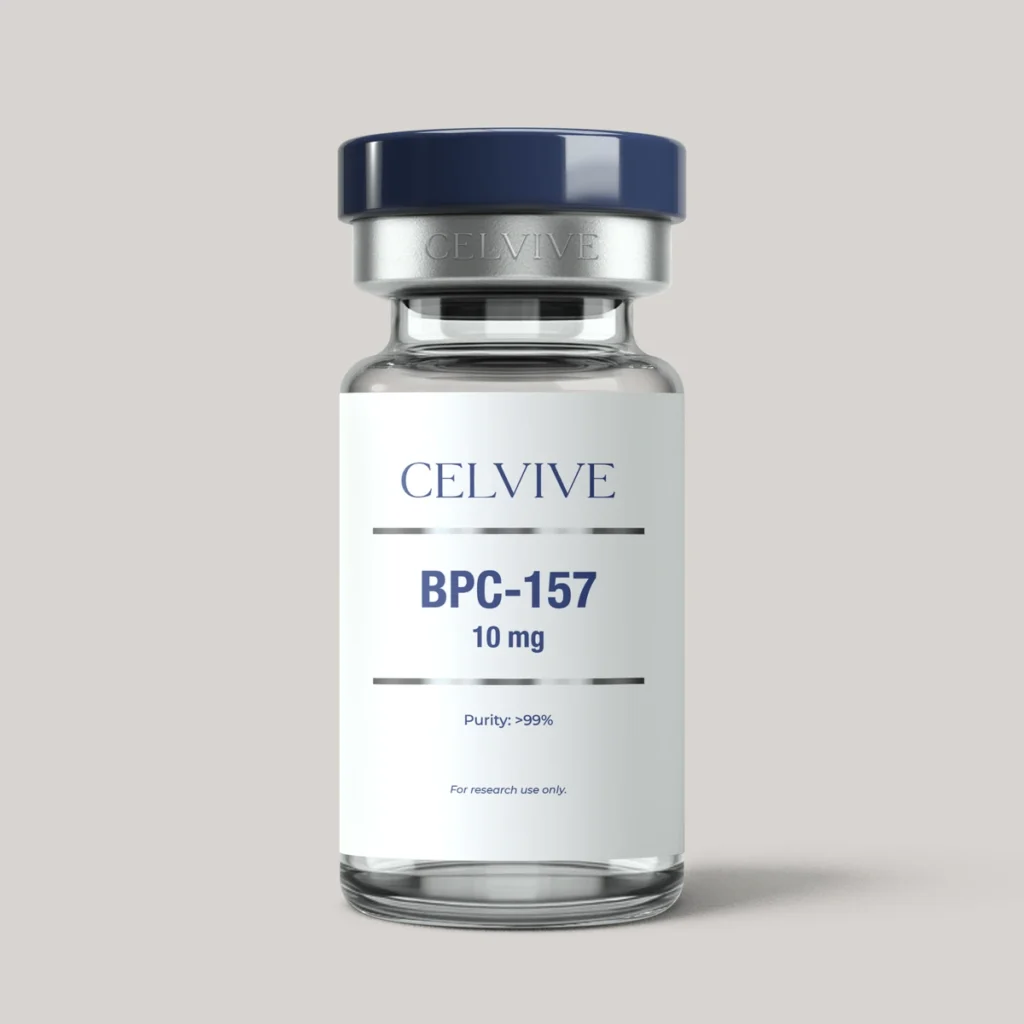
BPC-157
Gastric-derived pentadecapeptide used in tissue-repair research
10 mg vial · 10 mg pen